For sellers6 min read
Cleaning out the tack room? How to list tack so buyers can decide
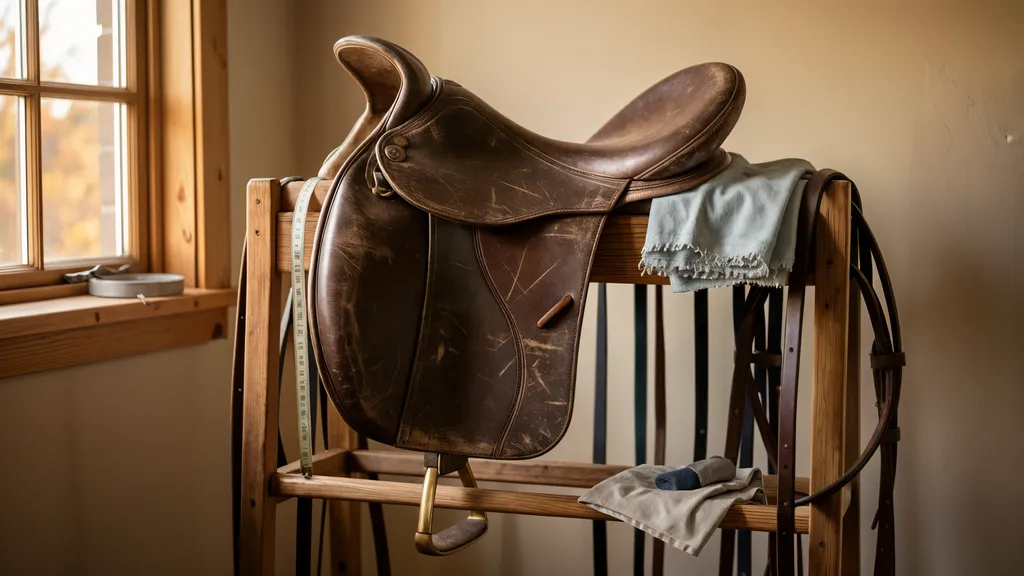
Late fall is when a lot of tack rooms get a hard look. The show season is over, the horse who wore that bridle has moved on, and the extra saddle has been on its rack all year.
Used tack and equipment can be worth selling. But a buyer cannot try a saddle on their horse from a photo, and a show cart is a long drive to go look at. The listing has to do most of the work.
A good tack listing answers the questions a buyer would ask in person: what is it, what size is it, what shape is it in, and what comes with it. Here is how to cover each one.
1. Clean it before you photograph it
Clean leather, polish metal, and brush off dust and hair. Clean tack photographs better, and it lets a buyer see the real condition rather than a layer of barn dirt.
Do not use cleaning to hide anything. If a scuff or a stain does not come out, it goes in the photos and the description.
2. Choose your photos so each one has a job
A tack listing on Barn2Buyer takes one to three photos, and the first is the one buyers see first. With so few, give each photo a job:
- The whole item, in daylight, on a plain background, with nothing else in the frame.
- The maker's mark, stamp, label, or size tag, close enough to read.
- The worst wear point, up close: the flaw a buyer would most want to see before driving out.
If the item has no mark or tag, use that photo for the next most important wear point or repair.
Where the worst wear usually shows
- Saddles: the seat, the underside and panels or fleece, the billets or latigo, and stitching that carries weight.
- Bridles: where the leather bends at the buckles, keepers, and bit attachments, and the crownpiece.
- Show carts: the wheels and tires, and the shafts where they attach. Show any rust, bends, or repairs.
- Tail switches: the top where it attaches. Color can look different under barn lights, so shoot in daylight.
- Showing suits: the cuffs, hems, and lining, and any marks or alterations.
While the item is clean and out, take the other views too and keep them in one folder: other sides, the underside, close-ups of stitching and repairs. When a buyer asks to see more, you can send them the additional views directly.
Three photos cannot show everything, so the description has to carry the rest. Name every flaw in words, including the ones that did not make the photos.
3. Give measurements and sizes, and say where they came from
Size is the question a tack buyer cannot answer from a photo. Give what you know, and say how you know it.
- Saddles: seat size, tree size or width if it is marked or known from the maker, and the type of saddle. If the gullet or tree is adjustable, say so.
- Bridles: the size (such as pony, cob, or full) and, if you can, the measurement of key pieces, such as the browband or noseband.
- Bits: the mouthpiece width.
- Show carts: the overall length of the shafts, the wheel size, and the size of horse or pony the cart was used with.
- Tail switches: the length and the color.
- Showing suits: the label size plus actual measurements, such as chest, waist, and jacket or pant length, because labels and alterations vary.
Be careful with saddle fit claims. Extension Horses, a national Cooperative Extension resource, notes that "no standards for gullet measurements exist within the saddle industry," that most gullet measurements are taken on a raw tree, and that "once a saddle is finished, there is really no way to determine the gullet width." So repeat the size the maker stamped or stated, say that is where it came from, and avoid promising that a saddle will fit a certain breed or type of horse. The buyer, and the buyer's saddle fitter or trainer, decides fit on their own horse.
4. Describe the condition honestly
On Barn2Buyer you pick one condition for the item: New, Like new, Good, Fair, or For parts or repair. Buyers see the grade you choose, so let the description back it up in plain words.
- Say how old the item is, if you know, and how much it was used.
- Name each flaw: a cracked edge, a loose stitch, a scuffed flap, a stain on the lining, a dented wheel.
- Say what has been repaired or replaced, and by whom if a professional did it.
- Say how it was stored. Tack stored in a dry room reads differently to a buyer than tack stored in a damp barn.
A short honest description saves you from a buyer who drives a long way and turns around, and from one who buys and is unhappy later.
5. Say exactly what is included
Buyers want to know what arrives in their hands. List it:
- Saddle with or without stirrups, leathers, girth or cinch, and pad?
- Bridle with or without a bit and reins?
- Cart with or without a harness, seat cushion, or cover?
- Suit with or without the vest, tie, or hat?
If something in the photos is not included, say so. A photo of a bridle with a bit, when the bit is not for sale, will cause confusion.
6. Research a fair price
You do not need a formula. Look at what similar items, from the same maker if possible, in similar condition, are being offered for. Use the current new price as one reference when the same or a comparable item is still sold. Then adjust for condition, age, and what is included.
If you are not sure, ask a trainer or someone who buys and sells in your discipline. Whatever you choose, put the price in the listing so a buyer can decide whether to ask more.
7. Decide how the item will reach the buyer
On Barn2Buyer you offer local pickup, shipping, or both. Show carts are local pickup only.
If you offer pickup, say roughly where and when the item can be collected. If you offer shipping, say who pays and how the item will be packed. Barn2Buyer does not handle pickup, shipping, or payment. Those arrangements are between the buyer and the seller.
Tack listing checklist
- Item cleaned
- First photo: the whole item, in daylight
- Second photo: the maker's mark, label, or size tag, if there is one; otherwise an important wear point or repair
- Third photo, if used: the worst wear point or another detail a buyer needs to see
- Other views saved, ready to send when a buyer asks
- Every flaw and repair named in the description
- Measurements and sizes listed, with where they came from
- Condition grade chosen and backed up in the description
- What is included, and what is not, listed
- Price researched
- Local pickup, shipping, or both decided
How Barn2Buyer handles tack and equipment
Barn2Buyer has a tack and equipment section for saddles, bridles, show carts, tail switches, showing suits, and similar items. Your first tack item is free until it is sold, with no card needed, and there is one free tack item per account, ever.
About every 90 days, an email asks whether the item is still for sale. If you do not confirm within 7 days, the item becomes inactive, and you can reactivate it free.
These items are not allowed in the section:
- Medication, supplements, feed and veterinary items
- Used safety helmets
- Recalled or counterfeit goods
- Motor vehicles and road trailers
Item details and condition are provided by each seller. Barn2Buyer does not inspect items, and it is not part of the sale. It takes no commission, and the deal and payment are between buyer and seller.
List one tack item free on Barn2Buyer
Start with the piece that has been on the rack longest. Clean it, take up to three useful photos with the checklist above, and list it on Barn2Buyer as your one free tack item.
Create free accountHelpful resources
- Extension Horses (Cooperative Extension), How do you measure gullet size on a saddle? (read 2026-11-10)